
How eSIM Is Changing In 2026?
Entering The Scalability Conversation
As eSIM is becoming more widely adopted, it is no longer discussed as a "future technology". The question of whether eSIM works no longer exists in the market. The industry is more interested in how operators, MVNOs, travel connectivity providers, IoT companies, and digital brands can deploy, manage, and monetize eSIM at scale. According to ByteSIM, eSIM deployment will reach an operational scale in 2026, when reliability, automation, backend readiness, and customer experience will become the real challenges (ByteSIM, 2026). Additionally, the number of eSIM-enabled devices will increase by 30% in 2026, rising from 1.2 billion in 2025 to 1.5 billion worldwide (Juniper Research, 2026).
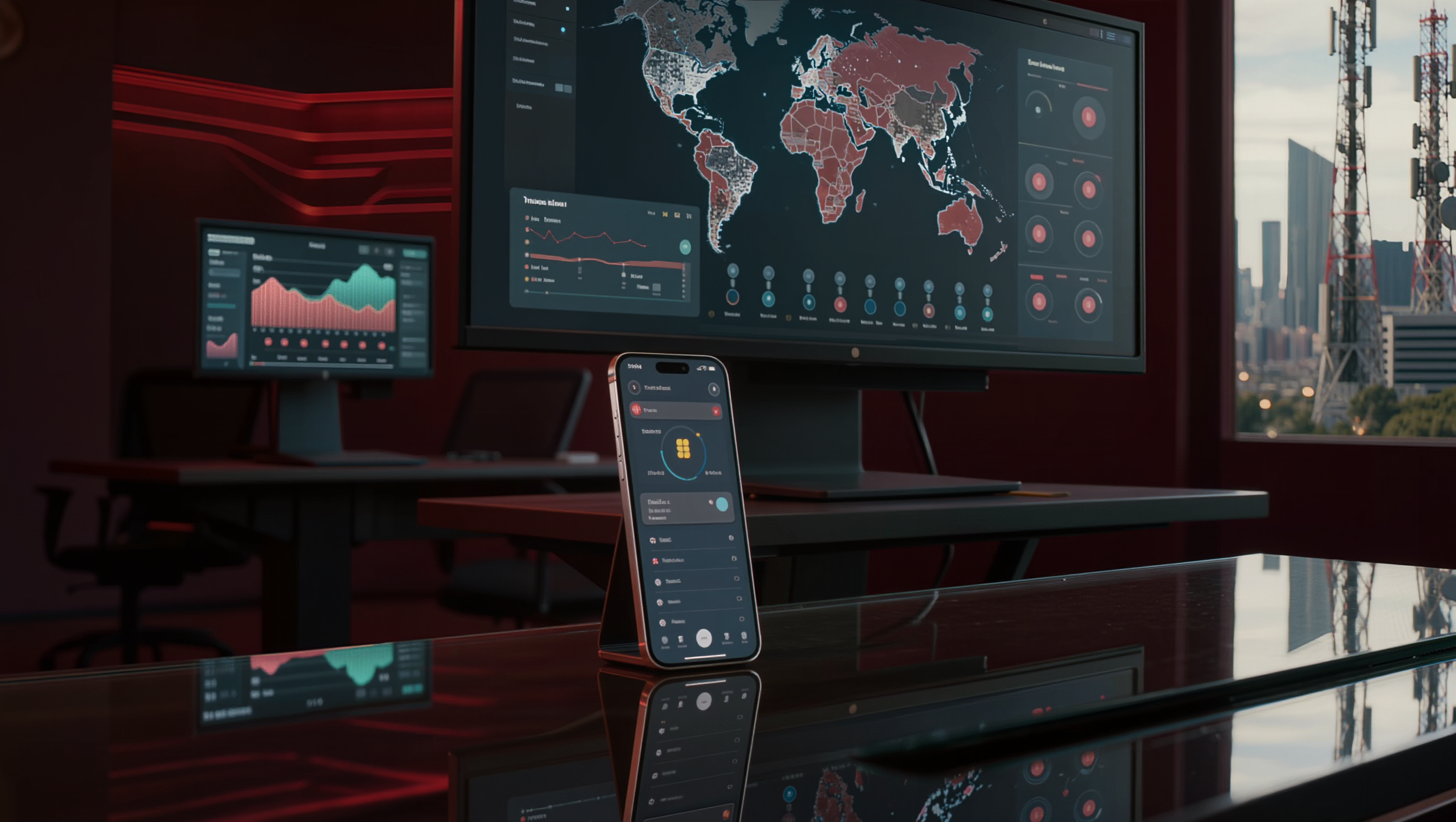
This is significant because eSIM is no longer restricted to high-end smartphones. Connectivity for travel, enterprise mobility, IoT, logistics, utilities, wearables, and embedded digital services are just a few areas where it is becoming relevant. That presents telecom companies with both an opportunity and a challenge. The real value will come from building services that are easy to activate, simple to manage, commercially attractive, and scalable across different markets and customer segments.
Cannibalism by eSIM?
Travel is a clear area that forecasts being dominated by eSIM. Customers increasingly anticipate being able to land in a new country and activate data without having to go to a store, purchase a physical SIM, or deal with the usual friction associated with roaming. Travel is a significant entry point for consumer eSIM adoption due to the simplicity, speed, and ease of use (ByteSIM, 2026). Essentially replacing Roaming, it is another case of emerging technologies taking market share from existing ones.
Another significant driver of growth is enterprise IoT. SIM replacement by hand cannot be used in vehicles, smart lighting, energy, oil and gas, logistics, or industrial settings. Remote provisioning and large-scale connectivity management are becoming essential. The sectors of connected logistics, oil and gas, and smart street lighting are anticipated to contribute 75 million new eSIM connections in 2026. The shift towards multi-carrier and carrier-agnostic connectivity is another trend.
Challenges Ahead Of eSIM
The growth story of eSIM is strong, but it's not easy to implement. The industry now faces practical challenges around activation, interoperability, standards, provisioning, customer support, lifecycle management, and regulatory compliance.
There is a clear distinction between offering eSIM and effectively activating it, noting that many mobile network operators now offer it. The activation gap is still a real problem, particularly when customer experience varies across platforms, markets, operators, and devices (ByteSIM, 2026).
Standards are also shaping the next phase of growth. SGP.32 is particularly important for IoT because it supports scalable remote provisioning through IP-based protocols. For devices that cannot rely on SMS-based provisioning or manual handling, this is crucial. The eSIM platforms will need to be able to support more adaptable provisioning models that can be used across large device fleets as IoT deployments grow (Juniper Research, 2026).
Lifecycle management is the bigger question than just the initial activation. Profile swaps, recovery workflows, device transfers, enterprise policy control, multi-market compliance, operator relationships, and post-deployment support must all be taken into consideration by businesses. To put it another way, eSIM is evolving from a technical feature into a business capability. This is why the year 2026 is so significant for industry education. The market is moving quickly, but companies need more than general awareness. They need practical discussion about what is working, what is difficult, and where the next commercial opportunities are emerging.
How To Be Ready For The Next Wave
As eSIM moves from adoption to large-scale deployment, the industry's biggest challenge is no longer the technology itself. The real challenge is understanding how to deploy, manage, monetize, and scale eSIM successfully across different markets, customer segments, and use cases.
This is exactly why industry education and knowledge-sharing have become so important.
At Telco Academy, we believe the best way to learn is through practical insights from the companies actively shaping the market. That philosophy led us to create our Marathon series: multi-session educational events where industry experts share real experiences, market trends, technical developments, and future perspectives.
Following the success of last year's Roaming & eSIM Marathon, we are proud to launch the eSIM Marathon 2026, taking place on 23, 24, and 25 June 2026.
Over three days, leading companies from across the eSIM ecosystem will deliver six expert-led sessions covering topics such as travel eSIM, IoT connectivity, remote provisioning, commercial opportunities, platform readiness, customer experience, and the future of embedded connectivity.
The goal is simple: to help telecom professionals understand better where the eSIM market is heading and what opportunities lie ahead.
All sessions are FREE to attend and designed to provide practical, educational value for operators, MVNOs, enterprises, vendors, and connectivity providers worldwide.
Join us and get ahead of the game already.